


TECHNICAL ARTICLE
Koorian Cattle Grazing Trial
Comparative weight gain on pasture fertilised with conventional or Ecogrowth® products.
JULY – DECEMBER 2025
Background
Ecogrowth® fertilisers provide comprehensive plant nutrition via soil biology, leaving improved soil and plant health in their wake. Improvements in soil nutrition and microbial activity can influence forage composition, carbohydrate accumulation, mineral density, digestibility, and ultimately animal liveweight gain. Growers have long observed improved pasture quality and preferential stock grazing where Ecogrowth® rock-mineral granular fertiliser and liquid bio-stimulants have been spread.
To confirm these observations, an agronomic cattle grazing trial was conducted from July to December 2025. The effects of an Ecogrowth® rock-mineral fertiliser and liquid bio-stimulant system on pasture and cattle weight gain were compared to those of a conventional fertiliser system. The trial took place in a Winter-Spring-dominated temperate rainfall zone, one hour north of Perth, Western Australia.
Methods
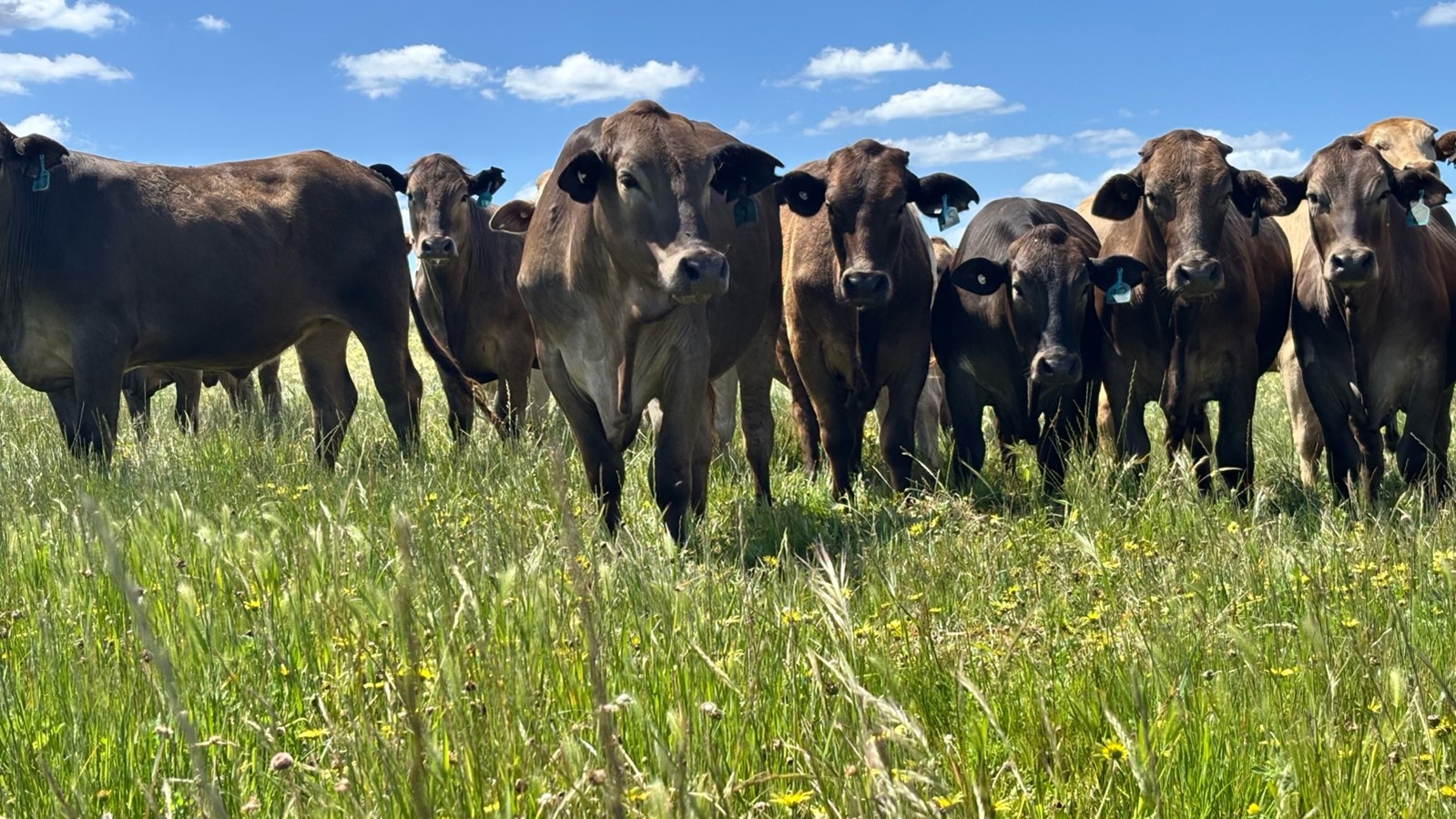
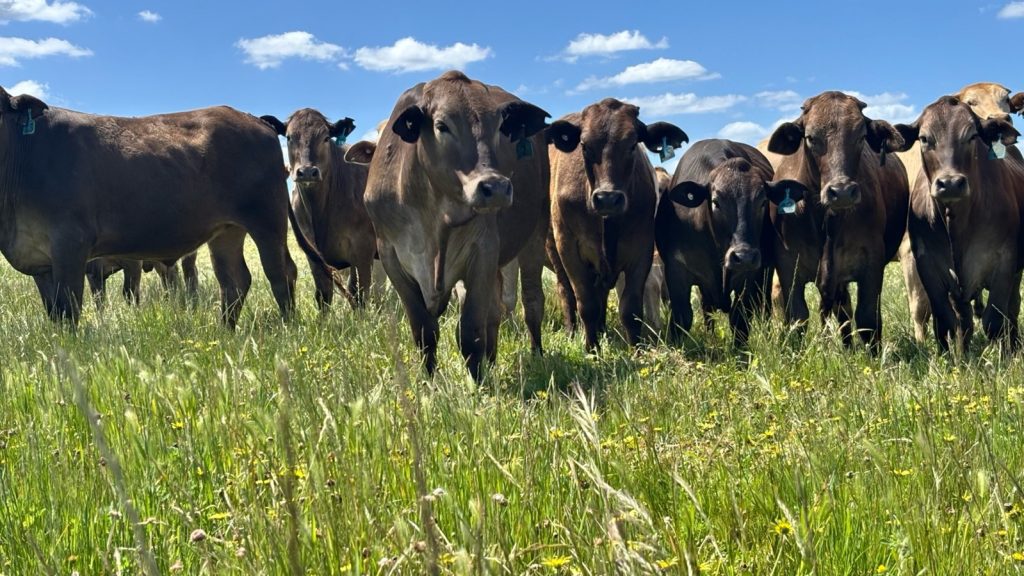
A split-paddock trial design was used wherein a 20-ha paddock under management of Bettini Beef was split (Fig. 1A, B next page) and treated with either a conventional or Ecogrowth® fertiliser program (Fig. 1D next page). The conventional fertiliser relied heavily on nitrogen input and encompassed only primary macronutrients, whereas Ecogrowth® fertiliser supplied less nitrogen in favour of a substantially broader essential nutrient profile, including key micronutrients and beneficial silicon. Fifteen head of cattle (Fig. 1C next page) were grazed in each half of the paddock from July to December, with a late grazing finish because of the favourable spring season. With replicated sampling, the following was measured during the trial:
- Soil biology (microBIOMETER®).
- Forage yield and quality (quadrant and transect measurements, NDVI, Forage Lab Australia).
- Cattle weight gain (regular weighing and body condition scoring).
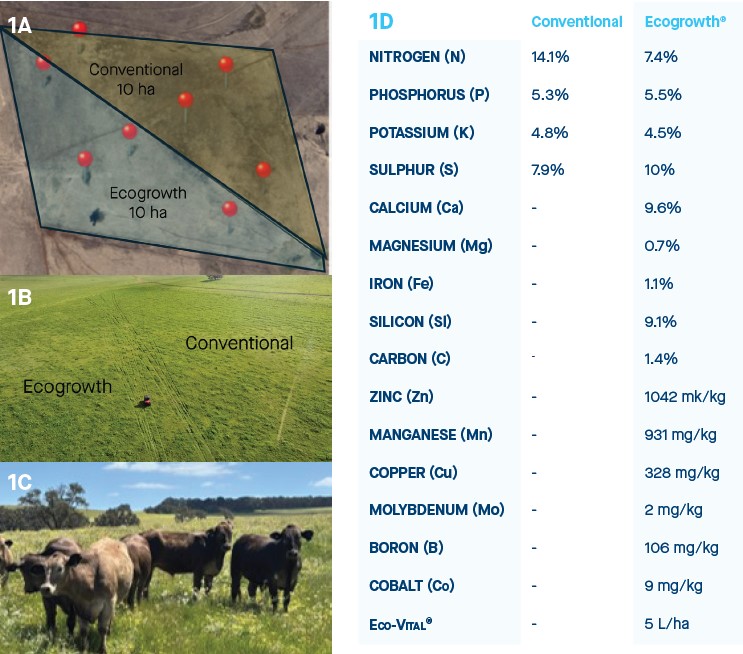
Figure 1: Trial setup. (A) A 20-ha paddock was divided into equal halves, and soil/forage sampling sites were marked out. (B) Cattle were separated using an electric wire. (C) 1–2-year-old male and female Murray Grey and Charbray Brahman crosses were grazed. (D) Paddock halves were treated with either a conventional or an Ecogrowth® nutrition program.
Results
Significant differences were observed between conventional and Ecogrowth® treatments regarding their effects on soil microbes, forage biomass, forage energy density, and cattle weight gain. By the end of the trial, a significantly higher amount of microbial biomass was measured in the soil underneath Ecogrowth® treated pasture (Fig. 2A). Ecogrowth® treatment also maintained balanced soil fungal: bacterial ratios over the trial period, which pasture typically benefits from, compared to the conventional treatment that became more bacterial-dominant (Fig. 2B).
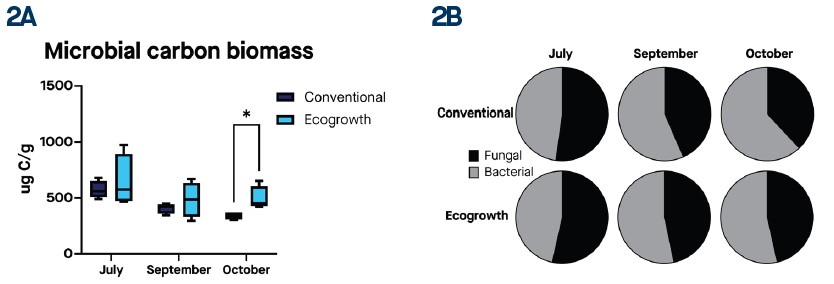
Figure 2: Soil responses to fertiliser treatment. (A) Soil microbial carbon biomass, as measured using a microBIOMETER® kit, was higher compared to Ecogrowth® pasture by end-trial (October, t-test, *=P>0.1). Data are depicted as box-and-whisker plots (N=4). (B) Soil fungi: bacteria ratios, as measured using a microBIOMETER® kit, revealed better maintenance of fungal populations in Ecogrowth® treated soil.
Forage biomass was measured under quadrant cages that protected the pasture from grazing throughout the trial. Ecogrowth® treatment led to consistently higher forage total biomass per hectare (Fig. 3A), as well as significantly higher individual grass plant biomass (Fig. 3B). Forage species composition based on a 100-point survey (Fig. 3C) showed increased bare ground at the expense of radish and clover under conventional fertiliser, whereas Ecogrowth® fertiliser maintained good ground cover and promoted grass, radish and clover growth over flat weeds. Maintenance of forage ground cover by Ecogrowth® but not by conventional treatment was highlighted by a stark disparity in NDVI values between the two paddock halves (Fig. 3D).
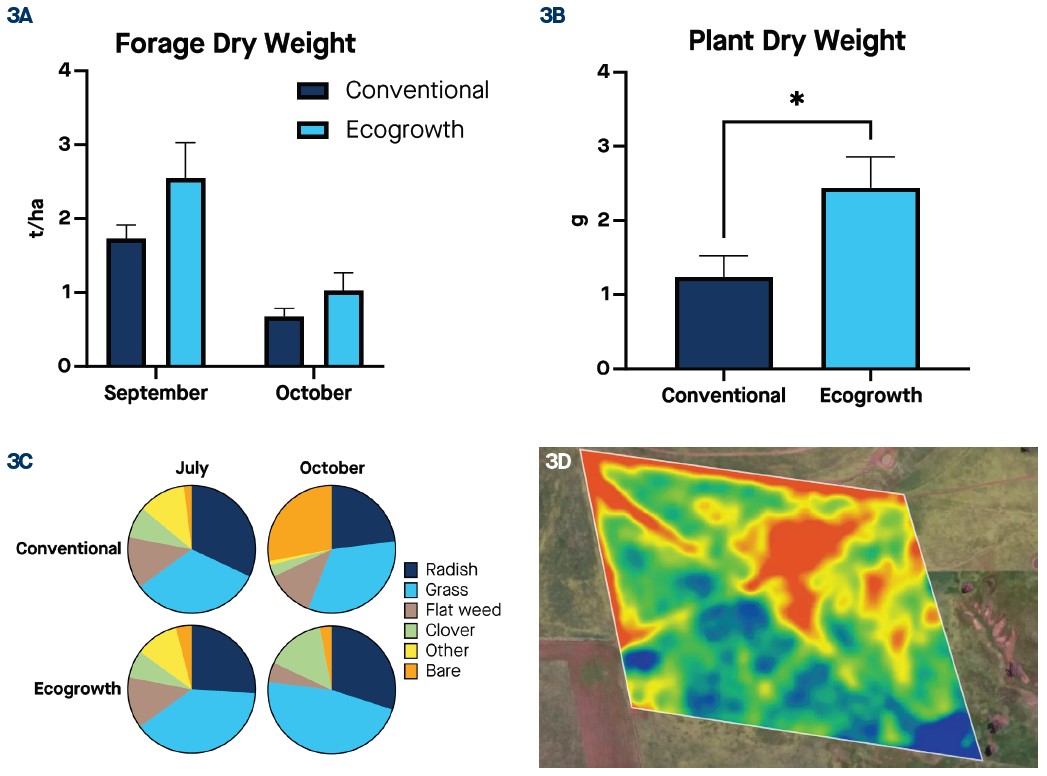
Figure 3: Pasture forage yield and composition. (A) Ecogrowth® pasture had consistently higher yield at mid-trial (September, P=0.16) and end-trial (October, P=0.26). (B) For grasses, whole plant dry weight was significantly higher in Ecogrowth® pasture (t-test, *=P<0.1). (A, B) Data are means ±SE (N=4). (C) Forage composition analysis over the trial period revealed an increase in bare ground in Conventional pasture at the expense of clover, radish and other less prevalent species, whereas ground cover was maintained in Ecogrowth® pasture, with grass, radish and clover species outcompeting flat weed and other less prevalent species. (D) Oct 22 NDVI image of trial paddock, where false colour of NDVI values (blue/green=high, yellow/red=low) shows greater vegetation density and health across Ecogrowth® pasture. (Source: Datafarm).
In addition to forage total biomass, forage nutritional quality was assessed. Some forage nutritional metrics showed minimal differences between treatments; however, pasture forage energy density indicators were higher under the Ecogrowth® treatment by trial end (Fig. 4).
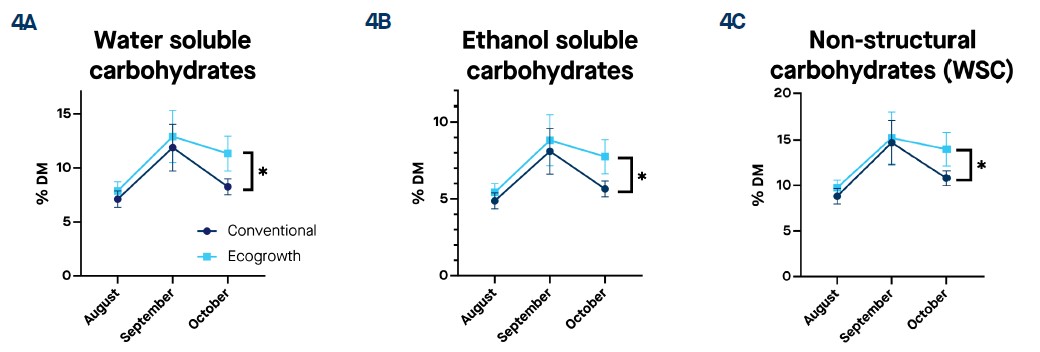
Figure 4: Forage energy density. (A-C) Forage energy density, as measured by water-soluble carbohydrates (A), ethanol-soluble carbohydrates (B), and non-structural carbohydrates (water-soluble carbohydrates; WSC) (C), was comparable between pastures at start and mid-trial, but accumulated at higher levels in Ecogrowth® pasture forage by end-trial (t-test, *= 0.13, 0.14, and 0.17, respectively). Data are means ±SE (N=4).
Average daily weight gain, calculated by averaging the periodic weighing data over the entire trial duration, showed that grazing on the Ecogrowth® treatment resulted in significantly greater cattle weight gain (Fig. 5A). Moreover, body condition score increased more so for Ecogrowth® grazed than conventional-grazed cattle (Fig. 5B). Interestingly, animal behavioural differences were observed during the trial; cattle in the conventional treatment approached any human activity, whereas those in the Ecogrowth® treatment kept their distance and rested, potentially indicating their satiety.
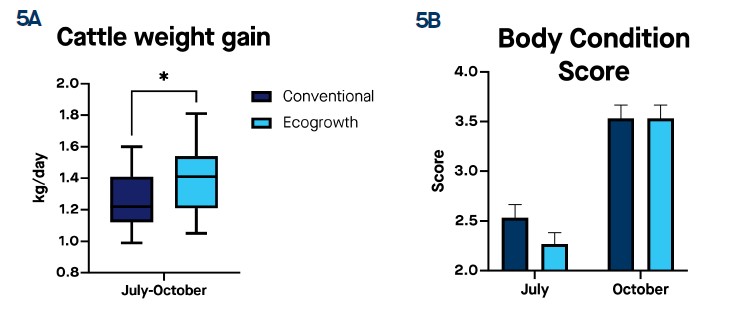
Figure 5: Cattle weight gain. (A) Cattle total weights increased consistently throughout the trial period. Data are depicted as box-and-whisker plots (N=15). t-test, *=P<0.1. (B) Average daily weight gain was significantly higher in cattle grazing on Ecogrowth® pasture. Data are means ±SE (N=15).
Conclusion and future direction
The Koorian cattle grazing trial provided analytical data to explain longstanding observations of improved pasture performance under Ecogrowth® fertiliser treatment. Compared to conventional treatment, Ecogrowth® fertiliser had a positive impact on soil microbiology, promoted greater plant biomass and forage coverage, and increased overall forage energy density. Moreover, over the trial period, Ecogrowth® fertiliser treatment resulted in desirable forage plant species, such as grasses and clover, increasing in abundance while weed species decreased. These differences led to improved feed quality and higher weight gain in cattle grazing on Ecogrowth® treated pasture. Increased weight gain means shorter days of grazing, mitigating the higher initial cost of using a premium Ecogrowth® fertiliser program. Economic analysis of input costs and weight gain value showed a higher average net profit per head on Ecogrowth® pasture and thus a greater overall return by investing in Ecogrowth® fertiliser.
These trial data are being used to shape ongoing forage and grazing demonstration trials, complemented by academic studies of how microbiome shifts caused by Ecogrowth® fertilisers influence soil health and pasture systems.
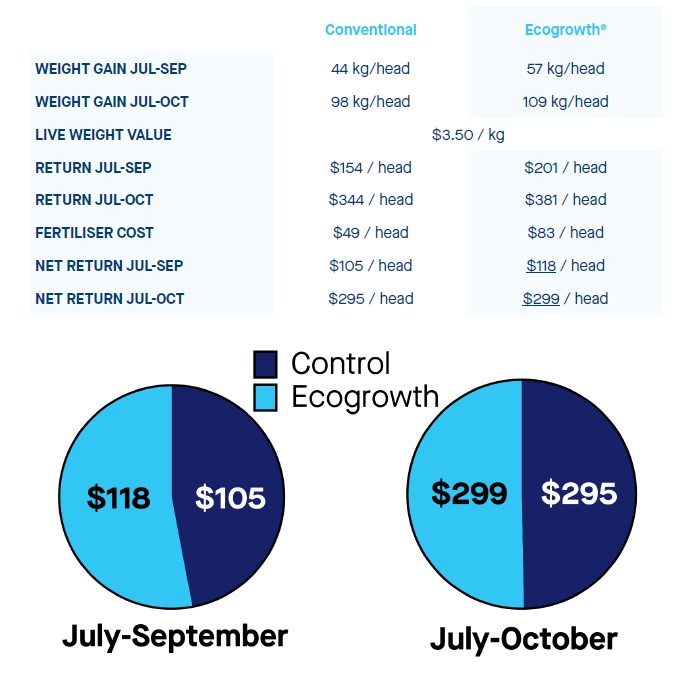
Figure 6: Average net profit per head, factoring in fertiliser price, final cattle weights and current live weight value, showing a greater return for cattle grazing on Ecogrowth® pasture.
TECHNICAL ARTICLES
You may also be interested in…
The Benefits Of Bacillus
Acting as a natural bio-fertiliser, biocontrol agent, and bio-stimulant, Bacillus bacteria are cornerstone beneficial microbes in agriculture. As they colonise…

Slow-Release Fertilisers And The Science Behind Them
Slow-release fertilisers are well-known in the agricultural industry. Their ability to provide a crop with a more consistent supply of…

Targeting Nutrition Pre-Flowering to Enhance Macadamia Yield
As the flowering season for macadamia ramps up across Australia, adequate tree nutrition is vital. The July to August period…

Lawnbassador Lawn Nutrition Program
Implementation and Results Introduction A healthy lawn depends on a healthy, biologically active soil. The Lawnbassador project was a collaborative…
Related products


Eco-Vital®
A premium natural kelp and fish fertiliser with plant extracts that delivers rapid results.

Subscribe to our newsletter
Stay up to date with all the latest Ecogrowth news, case studies and technical articles by subscribing to our newsletter.
"*" indicates required fields
Download our
product guide
Featuring the entire range of Ecogrowth products, including EcoAdvance® premium biology, biologically activated rock mineral granular fertilisers, commercial strength liquid fertilisers and soil amendments.